Showing posts with label camera. Show all posts

Thursday, December 28, 2017

5+1 Tips for Good Photographs

I am getting ready to teach photography again this coming semester, and I also have some friends with new cameras. So I have been reviewing my basic rules for taking good photos, whether by smartphone or a more elaborate camera.

Here are tips, plus a bonus, to help YOU take better photos (and the rules apply to video photography, also).


1. Tell a story 

Your photo will have the most impact when it tells a story.  What are the people doing? What is happening around them?


2. Don't pose (or at least don't let your shot look posed)

Posed pictures are boring.  Better to take candid or impromptu photos that feel more spontaneous.
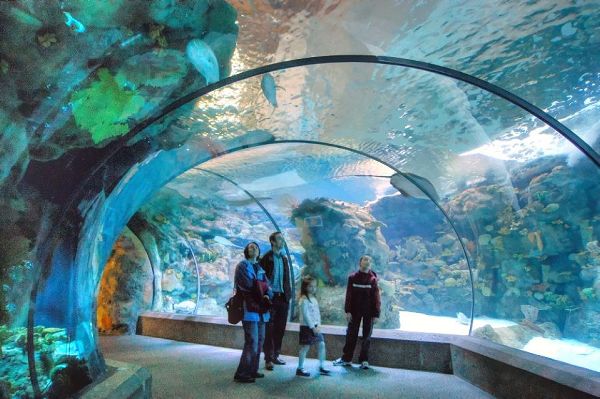


3. Plan your time and place

Often being at the right place and time makes the difference between a boring photo and a powerful one.  At events, figure out what the most interesting things are and figure out what the right angle to capture them is.  Wait patiently for just the right moment.

For outdoor photographs, time of day can also be important.  Early morning and late afternoon light is warmer and less harsh.   But also, avoid facing the sun while you shoot.  This will increase the odds of ending up with a silhouette (unless that is what you want).  It is often still a matter of finding just the right moment.


4. Take lots of shots and choose the best.

"One-and-done" is not the way to get great photographs.  Take a photo, look at it, and analyze "how could it be better?"  Then take another shot that makes it better.  Do this from several different angles, or in ways that capture several different elements of what is going on.


5. Don't center everything in your photo! 

This is the biggie, and is a principal you see across many realms of art. It is called the Rule of Thirds.  You mentally divide your shot into thirds, both horizontally and vertically.  Then you use these lines, in two complimentary ways.

One: The MAIN thing you are depicting should be at one of the intersecting points of those imaginary lines.  The rest of the shot should provide balance. Don't put everything right in the middle.

Two: Often, there will be a logical dividing line in a photo.  Outdoors, it might be a horizon line, or the edge of a tall building.  Indoors, it might be more than one person's face forming a sort of line.  Put those actual dividing lines along one of your imaginary thirds lines in a way that provides balance.  If people are facing left, put them at the RIGHT vertical line.  If you have a horizon line, decide what is more important, the sky or the land and choose your imaginary line accordingly.

Combining these two elements...matching horizontal and vertical lines in your shot with the imaginary lines of thirds, and putting your prime subject at an intersection of the lines...will give you strong, memorable photos.


6. Bonus: For cameras that are not in smartphones -- explore the menus and learn the settings, such as the various focus and exposure options.  Often the fully automated mode will not produce the best photos for advanced photographers.


There is a lot more to being a great photographer, but these 5+1 tips (rules) will help you stay on the right track.


Tuesday, July 4, 2017

Seven Rules to get Great Fireworks Photos

With Independence Day fireworks shows on the agenda, social media will be flooded by photographs of fireworks, and most will not be very good photos. Here are my tips for getting the best fireworks photos:
1. Use a tripod. Good fireworks shots will require a slow shutter speed and you can’t hand-hold the camera still enough. Make sure it is firmly on the bare ground and not wobbly.
2. Use a DSLR camera. Point-and-shoot and cell phone cameras are usually too automatic, and you will need to use some manual settings (see below).
3. Get there early and frame your shot. You need a location with a clear view in the direction of the fireworks with no power lines, utility poles, street lights, etc. Generally start with your lens zoomed as wide as it goes (after step 4 below). You may still need to adjust how your camera points when you see how high the fireworks go.
4. Focus manually. You can’t focus on the fireworks themselves, so focus on buildings, trees, etc, at the same distance as the fireworks will be. Zoom in all the way and use automatic focus, then switch to manual focus mode so the focus doesn’t change. After that, you can zoom in and out without the focus changing.
5. Use a low ISO. This is another manual setting. Many cameras adjust the ISO automatically, but you want to set the ISO manually as low as you can. ISO 100 or 200 is good.
6. Use a slow shutter speed. You may need to experiment some as the show progresses, but start with three seconds, which should give you nice filaments and detail. But because of this, make sure that your tripod is firmly planted, so that it doesn’t wobble when you press and release the shutter. If available, use a cable or wireless remote. Note: Many tutorials say to set your aperture manually, also. I use the shutter/speed priority mode, along with the manual ISO, which allows the aperture to adjust itself.
7. Get into a rhythm. Trip your shot as soon as you see the missile shooting skywards. If you wait until you see the firework explode in the sky, it will be too late.
Follow these seven rules, but also be flexible and prepared to tweak your settings slightly as the show progresses (particularly shutter speed and camera angle) and you will get some great fireworks shots.

Note: The photo above is my own.

Wednesday, January 25, 2017

Laser Snow

OK, so maybe this is a little weird. But when it's snowing at night, how do you know how much it's snowing?

You shine a laser pointer out into your back yard, of course, so every flake passing through makes the beam show.

(No airplanes or rock stars were targeted.)


Tuesday, January 17, 2017

Ice Storm Photos


Today was the aftermath of a big ice storm in much of the Great Plains.

This guy was perched in a tree near the road as I drove home, camera and 300 mm zoom lens always ready.

It was the first nice weather in about three days, so no doubt he was keeping his eyes open for a meal.

Saturday, December 10, 2016

Geese and Climate Change


The geese used to migrate in late October and early November.  Now they are migrating in December.

They have apparently bought in to the global conspiracy of thousands of scientists created by Mainland China to take money out of the pockets of hardworking billionaires.

Darn geese.

Sunday, October 30, 2016

Fall


Why we sometimes refer to Autumn as "Fall."

(We have two VERY large maple trees in our back yard.)


Sunday, October 16, 2016

Red-Tailed Hawk


This little Red-tailed Hawk was perched on a power pole as I drove home the other day, down my rural Nebraska highways.

Monday, October 3, 2016

Hawk


Autumn is a time when I often see hawks perched along the highway on my daily commute, particularly in the afternoon. This one posed nicely for me a while back. Nikon D5000, 300mm, F5.6, 1/1500th, 200 ISO.

Monday, September 5, 2016

Macro Photography


I really like macro photography, but I don't have a macro lens.

In photography, "macro" means close-up.  You get in close, as close as your camera can focus.  Then you crop, and maybe a little sharpening in Photoshop, to produce a final shot that reveals detail we usually miss.

Depth of field often plays a big part in macro work.  Because you are focusing so close to the lens, only a narrow slice of distance is in good focus.

Carefully controlling your point of focus can bring even more attention to in-focus elements of your composition.

This can make the final photo even more dramatic.

To do this kind of photography right, you need a special macro lens, especially designed for close-up work. Because of it's design and construction, it can focus very close and portray very small things quite large.

There are a lot of lenses that have reasonable macro capability, but thre are also some designed for exclusive use in macro work.

As I said, I don't have such a lens.  My more versatile lenses, such as my 18-105 zoom, do pretty well close-up.

WilI I get a true macro lens some day? I would like to, but there are a lot of camera-related things I would like that I don't  have.  Only time and the budget will tell.